Cut Flower Garden Layout for Full Sun: Design Tips and Ideas for a Blooming Paradise
Blog > Home > cut flower garden layout > Cut Flower Garden Layout for Full Sun: Design Tips and Ideas for a Blooming Paradise
Designing a cut flower garden in a full sun location is both rewarding and creative. Full sun provides the energy plants need to produce vibrant, long-lasting blooms, perfect for cutting and displaying indoors. A well-planned layout ensures maximum visual impact while allowing easy access for harvesting flowers. With careful planning, you can combine colors, textures, and heights to create a garden that is both productive and aesthetically pleasing. In this guide, we’ll explore twelve ideas to help you design a flourishing cut flower garden that thrives in full sun.
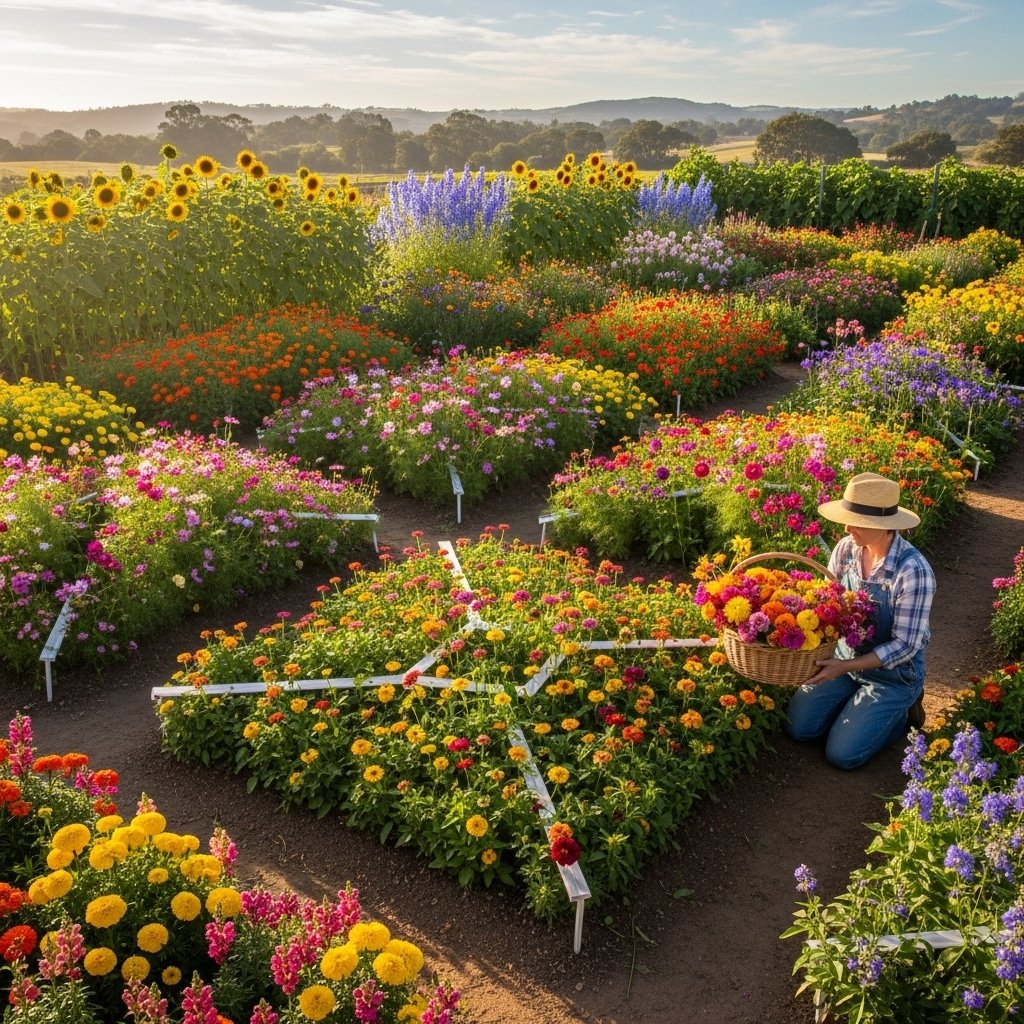
Table Of Content
1. Plan Your Garden Beds
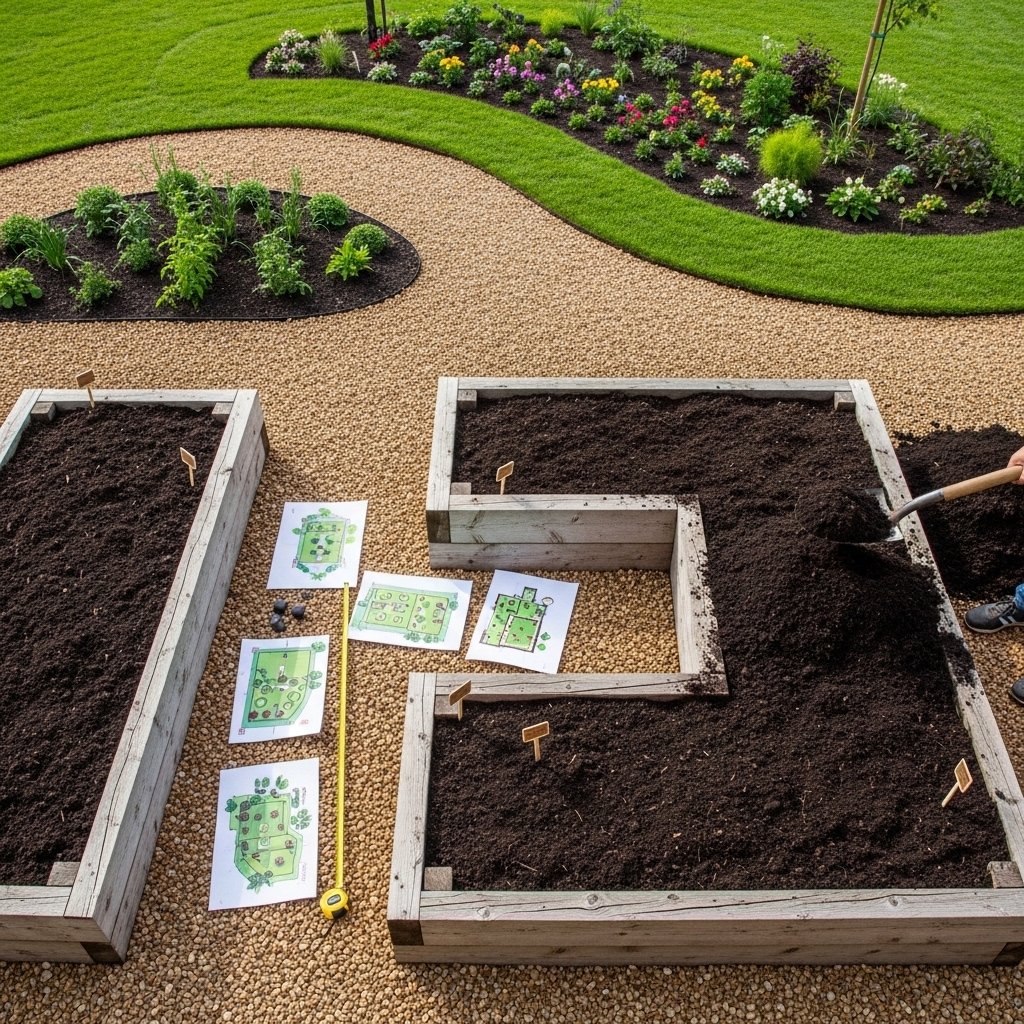
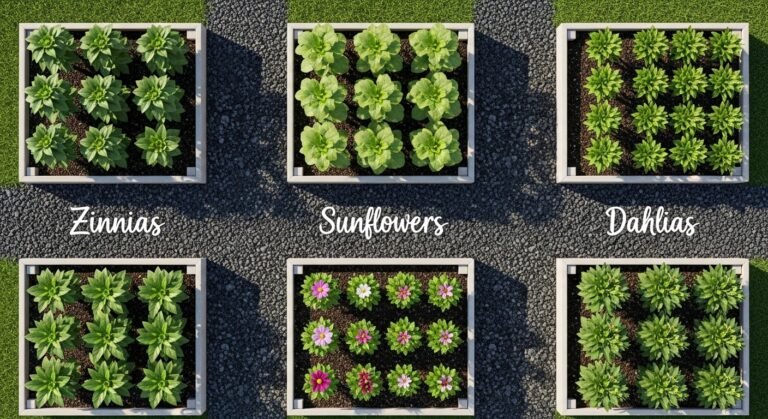
The first step in designing a cut flower garden is deciding the shape and size of your beds. Raised beds, rectangular plots, or curved borders can all work depending on your space and style. Ensure beds are wide enough for easy access without stepping on plants, typically 3–4 feet across. Well-planned beds improve airflow, reduce pests, and make harvesting flowers simpler. Preparing the soil with compost and organic matter is essential for healthy, long-lasting blooms.
2. Choose Sun-Loving Flower Varieties
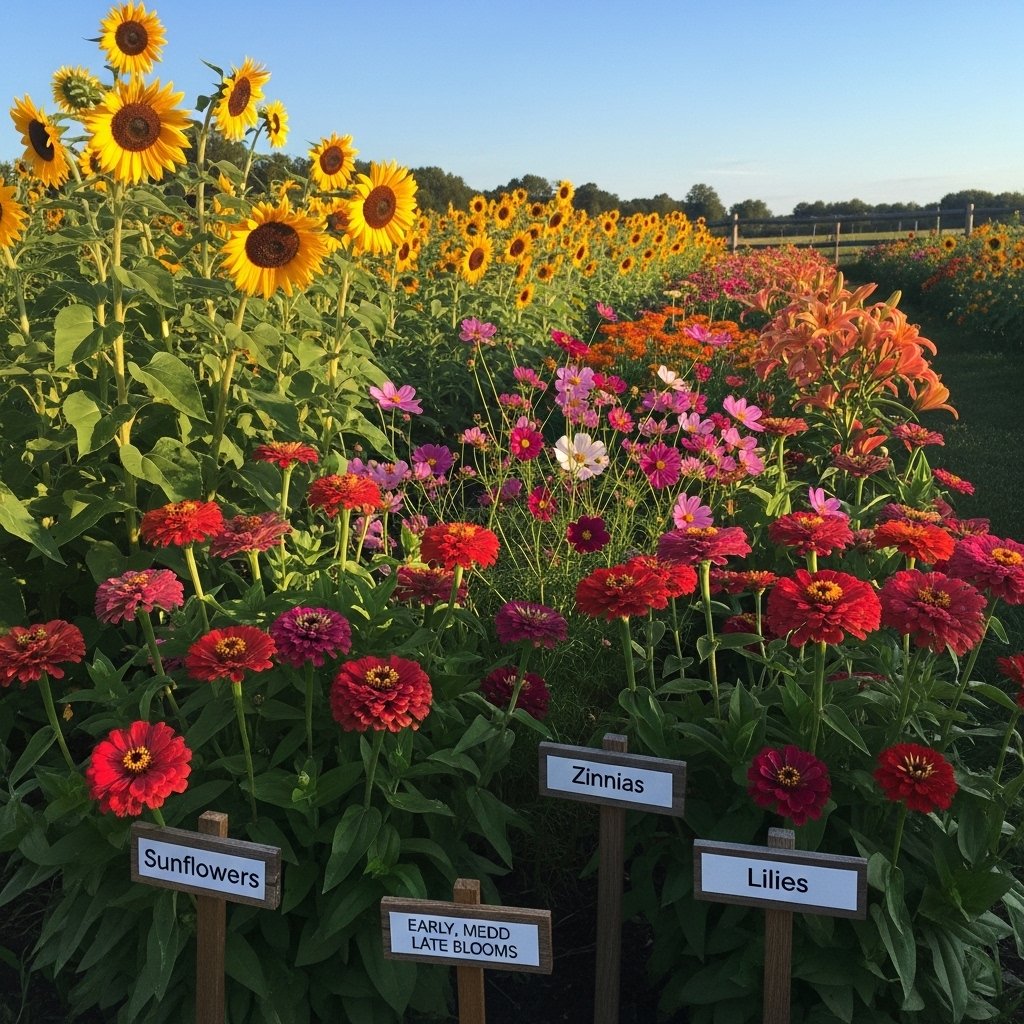
Full sun gardens require plants that can tolerate direct sunlight for at least 6–8 hours per day. Popular cut flower options include sunflowers, zinnias, dahlias, cosmos, and lilies. These varieties not only thrive in bright conditions but also produce long stems ideal for bouquets. Consider bloom times when selecting varieties to ensure continuous harvesting throughout the season. Mixing early, mid, and late bloomers keeps your garden vibrant from spring to fall.
3. Create a Color Palette
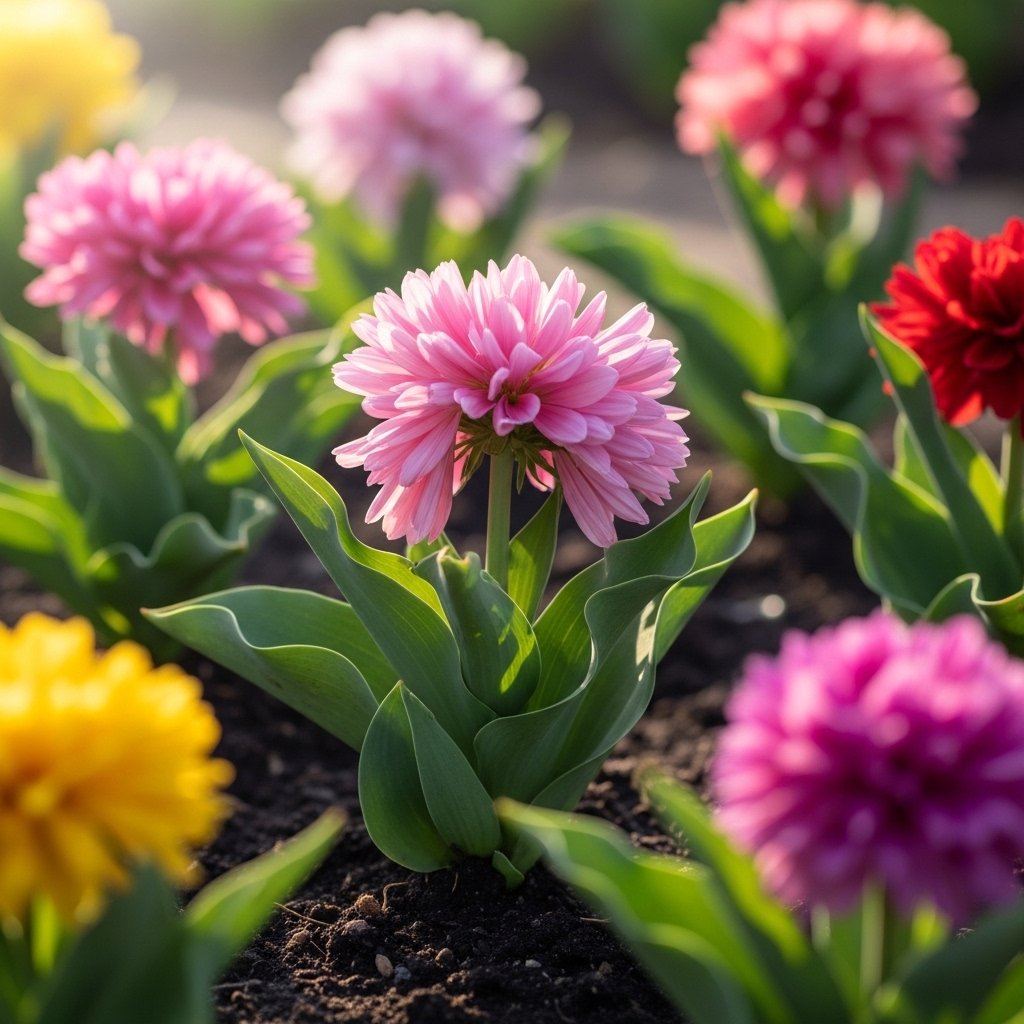
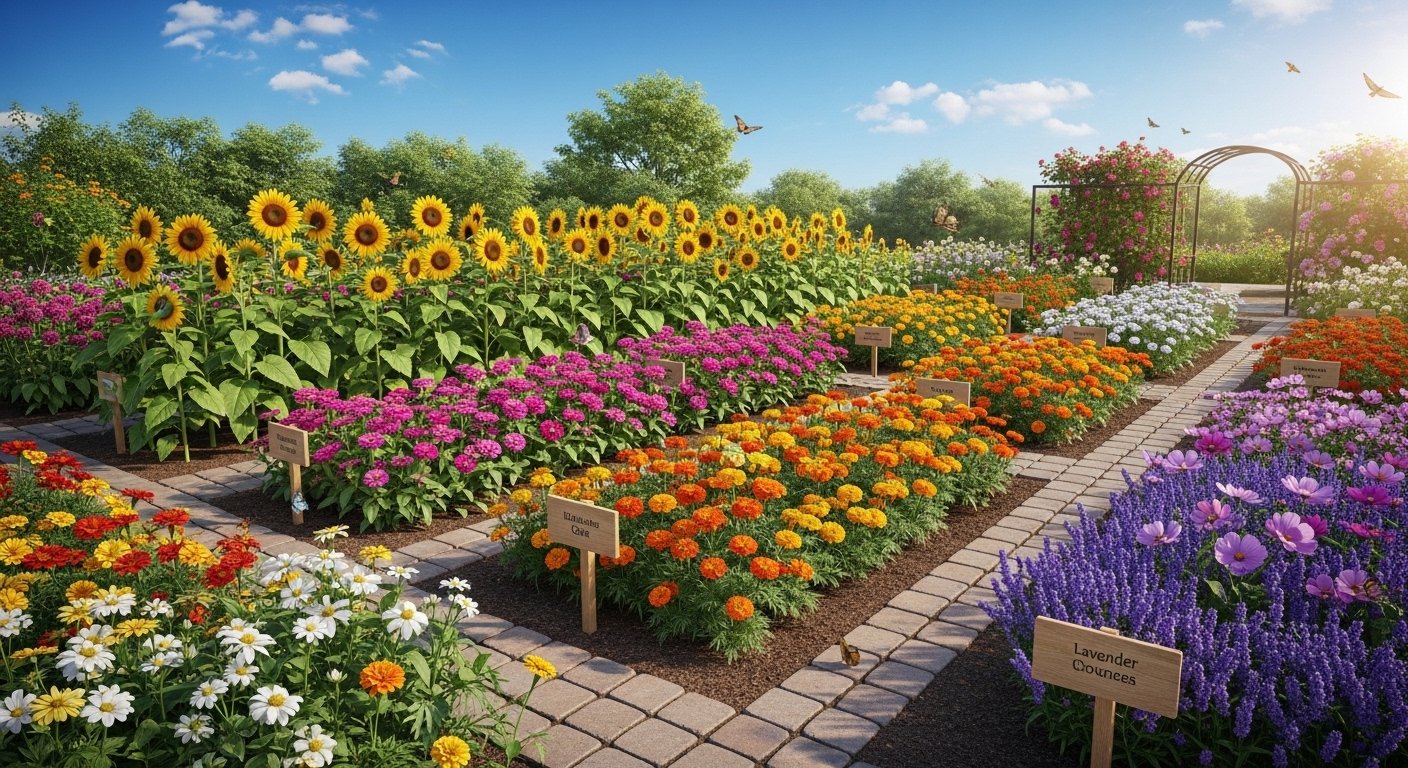
A harmonious color palette enhances the visual appeal of a cut flower garden. Choose complementary or contrasting colors to create interest and depth. For example, pair yellow sunflowers with purple salvia, or pink zinnias with white cosmos. Using a consistent color scheme makes bouquet planning easier and ensures flowers look cohesive when cut. Color placement within beds also guides the eye and creates natural focal points in your garden.
4. Use Height Variations Strategically
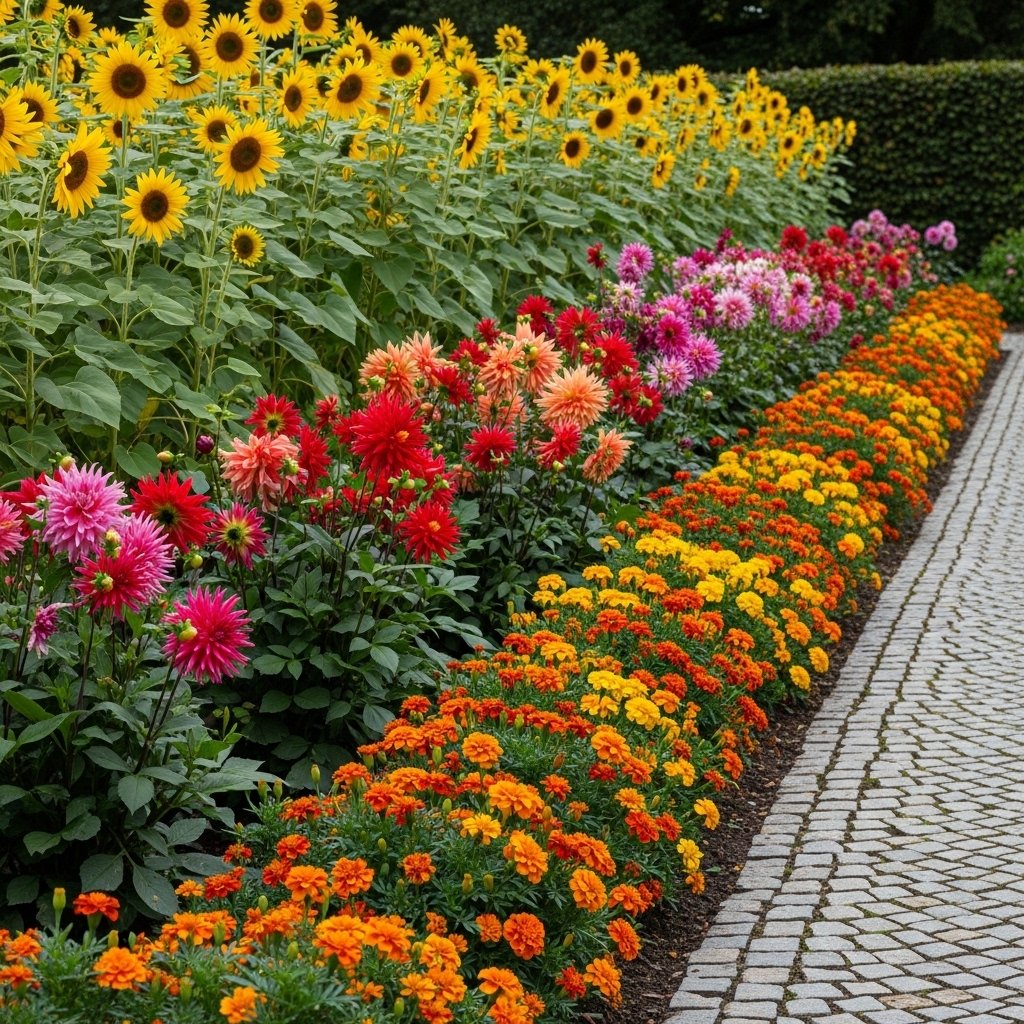
Height variation adds dimension and structure to your garden layout. Plant taller flowers like sunflowers or hollyhocks at the back of beds or along fences. Medium-height flowers, such as dahlias and coneflowers, work well in the middle, while shorter blooms like pansies or marigolds fill the front. Layering heights not only creates visual appeal but also ensures all flowers get adequate sunlight. This technique also makes harvesting easier, as you can access each stem without obstruction.
5. Incorporate Succession Planting
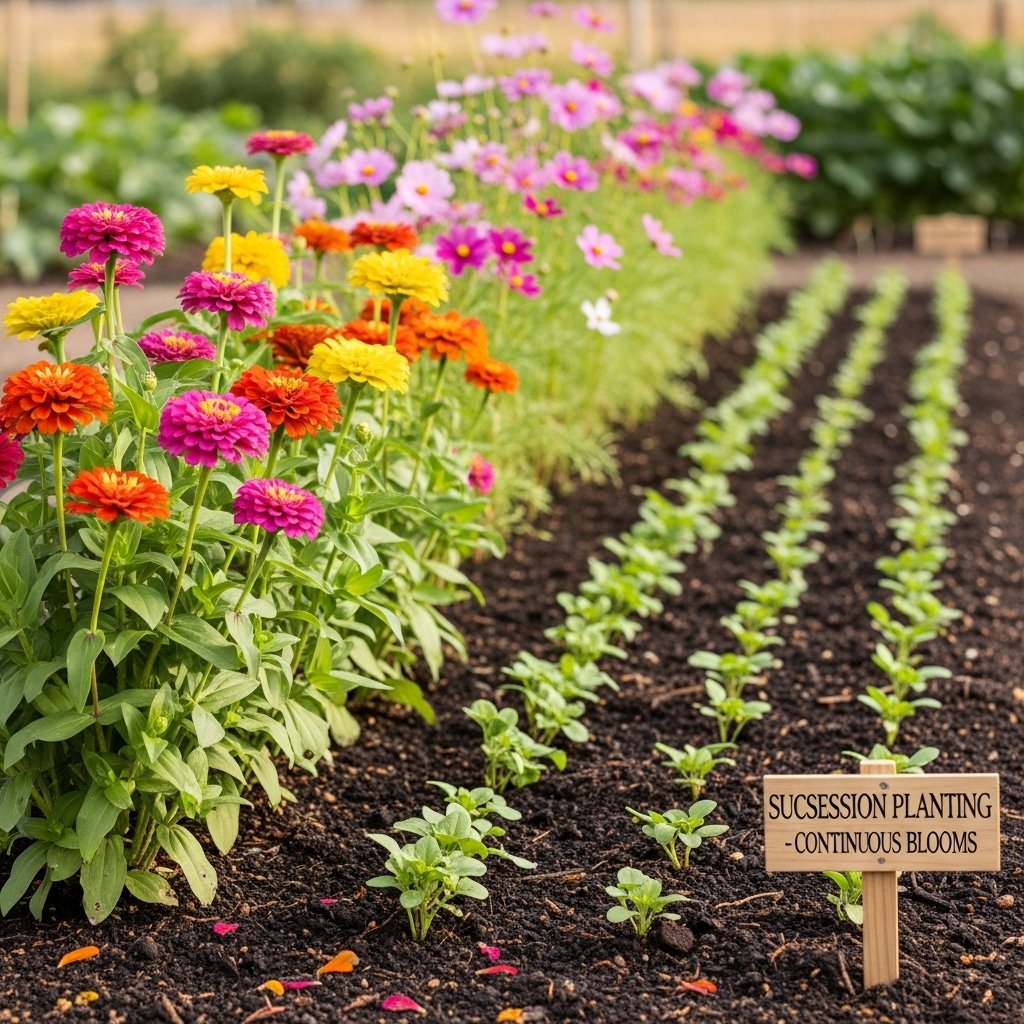
Succession planting ensures your garden continually produces flowers for cutting. Plant seeds or seedlings in intervals to extend the blooming period. For example, sow zinnias or cosmos every two weeks to maintain a steady supply of cut flowers. Succession planting prevents gaps in your garden and allows for fresh bouquets throughout the season. It also maximizes the use of garden space efficiently in full sun conditions.
6. Consider Companion Planting
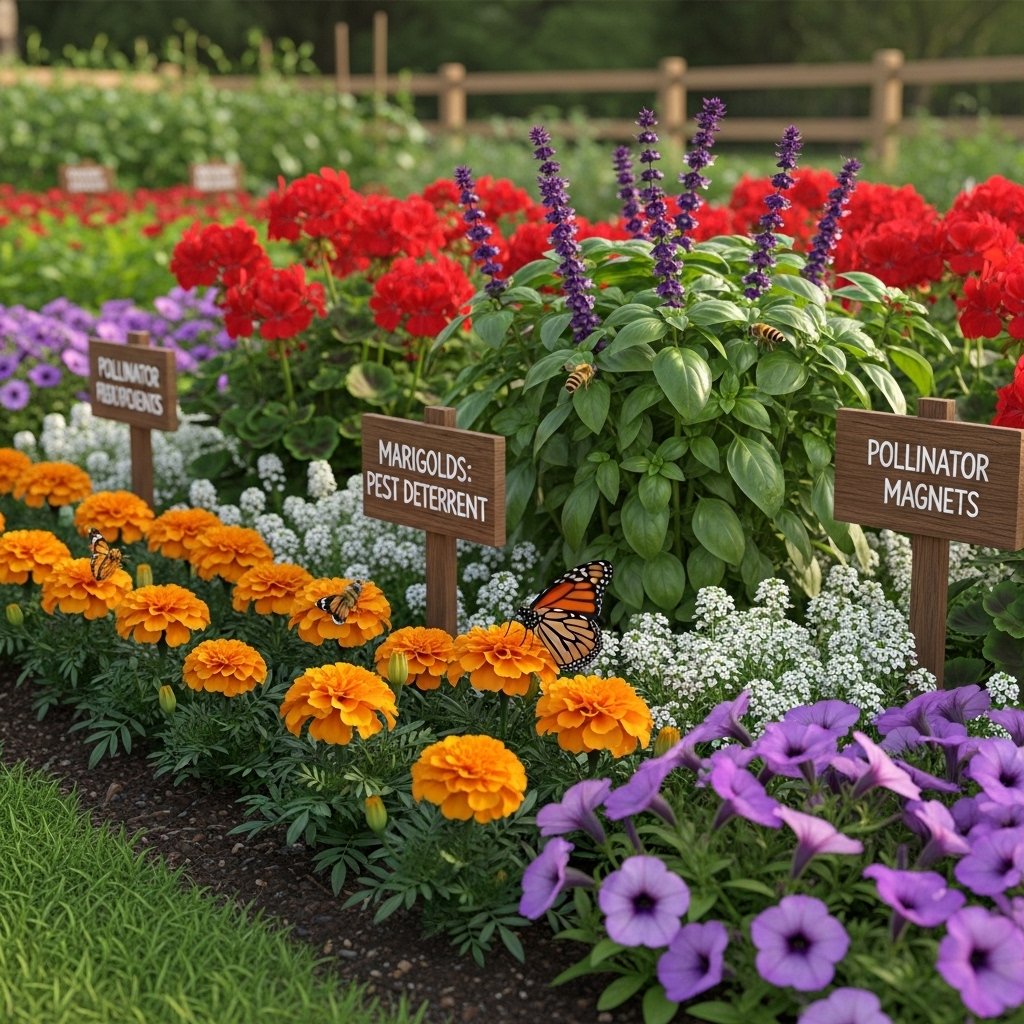
Companion planting helps improve plant health and productivity in a cut flower garden. Certain flowers, like marigolds, repel pests naturally and can protect more delicate blooms. Herbs such as basil or thyme not only attract pollinators but also enhance garden fragrance. Planting flowers with similar sunlight and water requirements ensures healthy growth for all species. Companion planting combines beauty with practical benefits for a thriving garden.
7. Plan Pathways for Easy Access
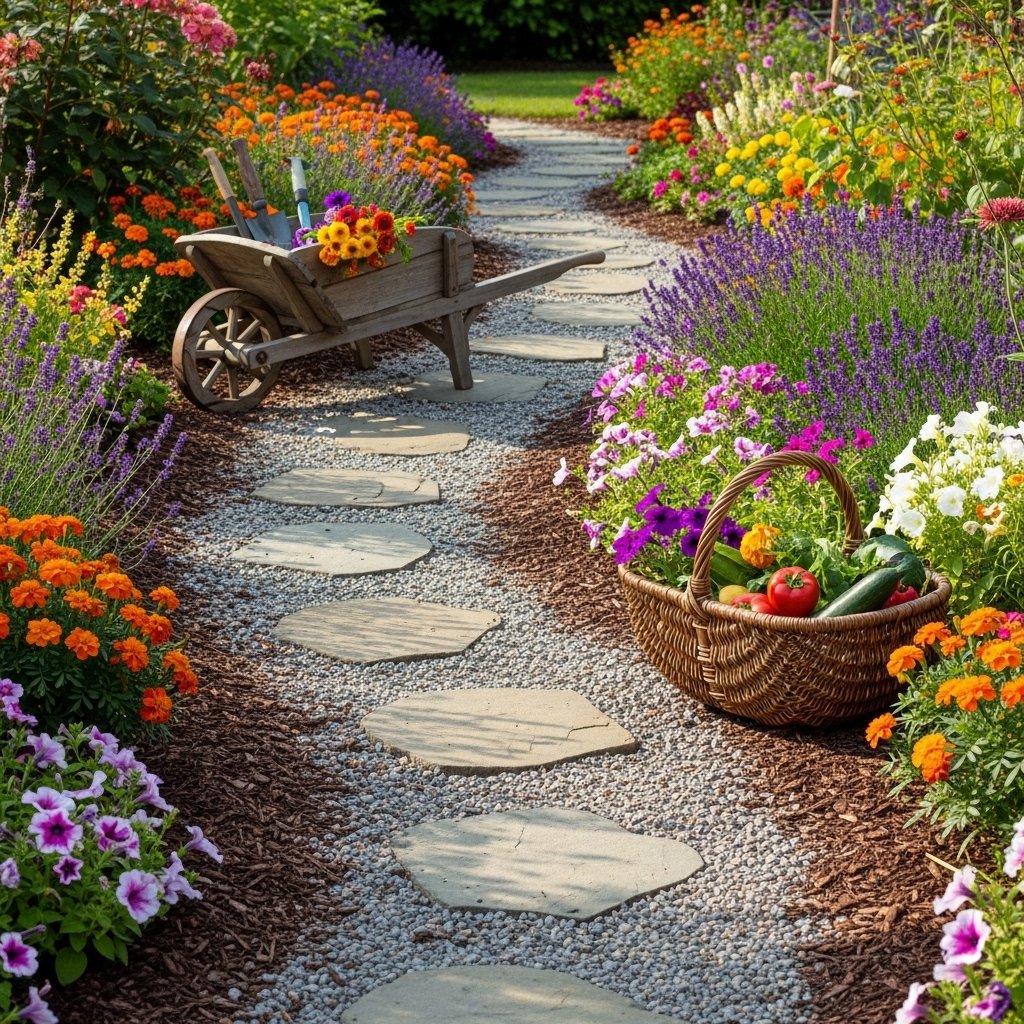
Pathways are essential for maintaining a full sun cut flower garden. Create walkways between beds wide enough for wheelbarrows and harvesting tools. Mulch or gravel paths prevent weeds and soil compaction while providing a clean surface to walk on. Accessible paths make cutting flowers less disruptive to surrounding plants. They also allow you to enjoy your garden fully without damaging delicate blooms
8. Mix Flower Textures and Forms
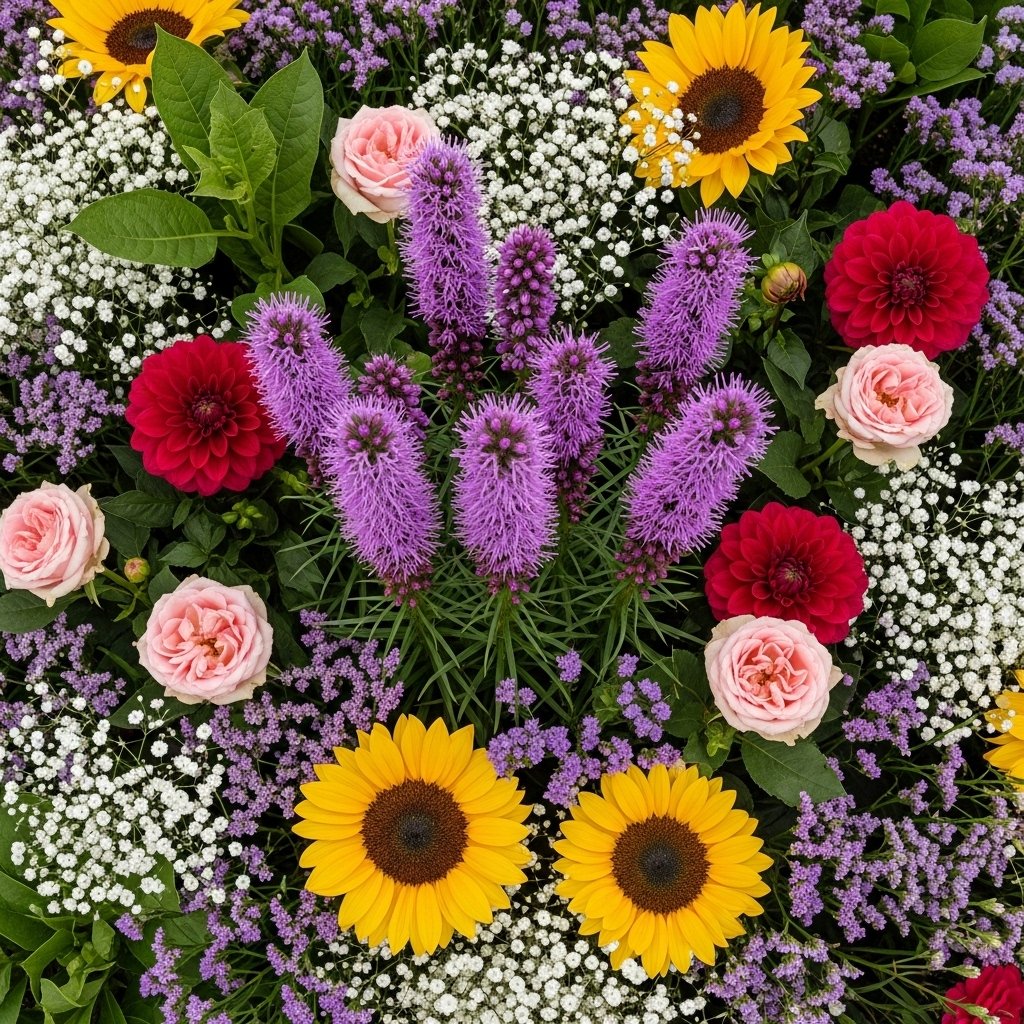
Variety in flower shapes and textures makes bouquets more visually interesting. Combine spiky flowers like liatris with soft, rounded blooms like dahlias or roses. Include filler flowers such as baby’s breath or statice to add volume and depth. Textural contrast also enhances the garden itself, creating layers of visual intrigue. This approach ensures that both the garden and the cut flowers have a professional, florist-like quality.
9. Implement Vertical Elements
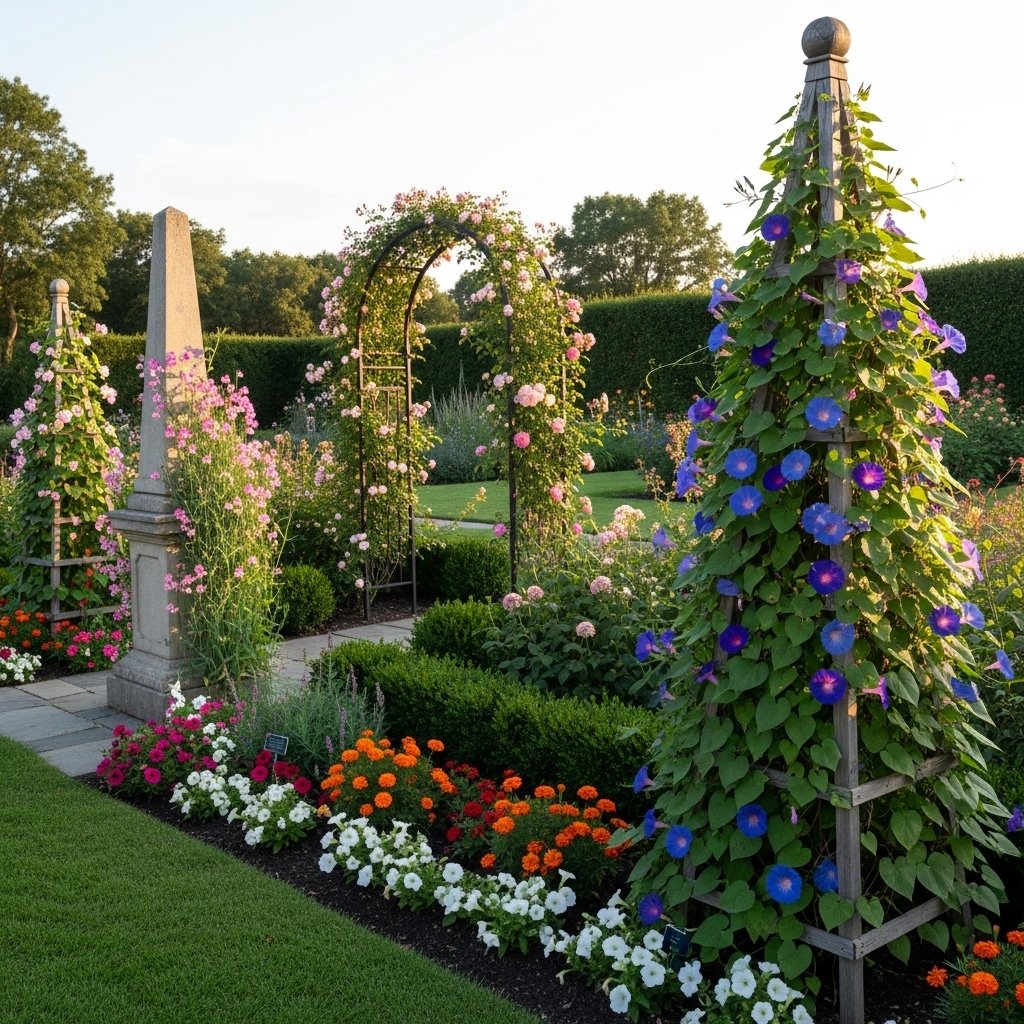
Vertical structures like trellises, obelisks, or arches add height and dimension to a cut flower garden. Climbing flowers such as sweet peas or morning glories can utilize vertical space efficiently. Vertical elements also help create focal points and guide the eye across the garden. Using structures strategically ensures sun-loving plants at different heights receive optimal light. They can also enhance garden aesthetics while maximizing limited space.
10. Schedule Watering and Fertilization
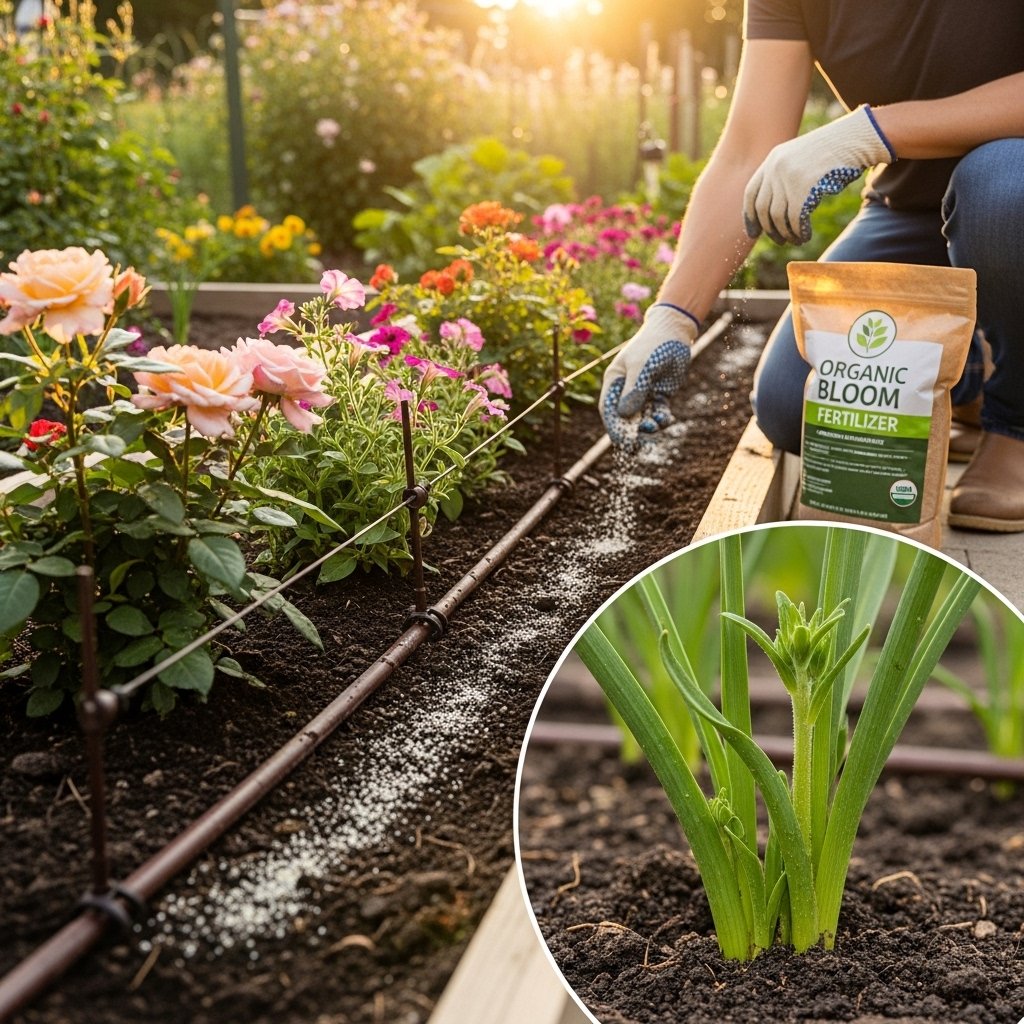
Full sun gardens require consistent watering to maintain healthy blooms. Drip irrigation or soaker hoses provide deep, steady moisture while conserving water. Regular fertilization with organic or slow-release fertilizers supports vigorous growth and prolongs flowering. Keep soil evenly moist, but avoid overwatering, which can lead to root rot. Proper care ensures stems remain strong and flowers last longer when cut.
11. Design for Seasonal Interest
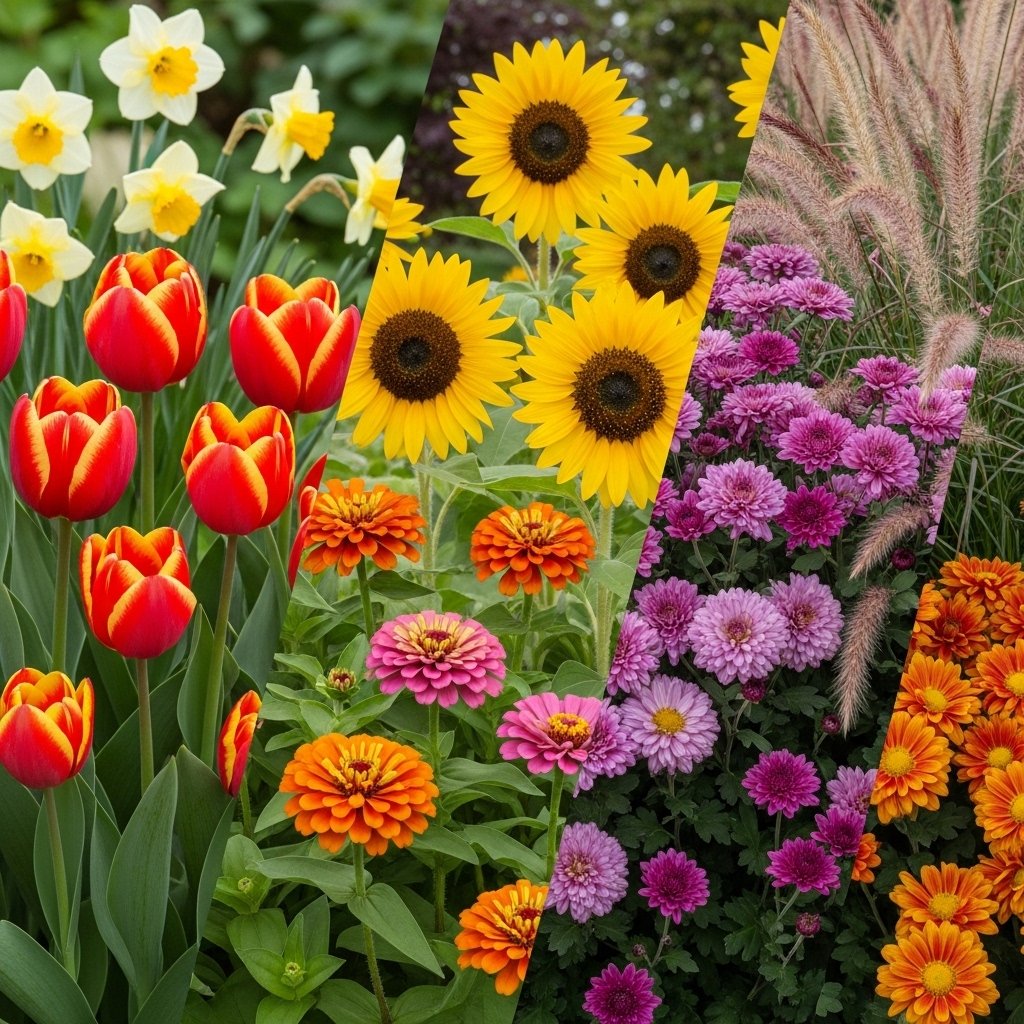
A well-planned garden layout ensures blooms throughout the growing season. Include early spring flowers like tulips and daffodils, followed by summer favorites such as sunflowers and zinnias. Extend interest into fall with chrysanthemums and ornamental grasses. Seasonal planning guarantees continuous harvests for bouquets and maintains garden beauty year-round. It also provides an opportunity to rotate flowers for different textures and colors in every season
12. Harvest Smartly for Continuous Blooms
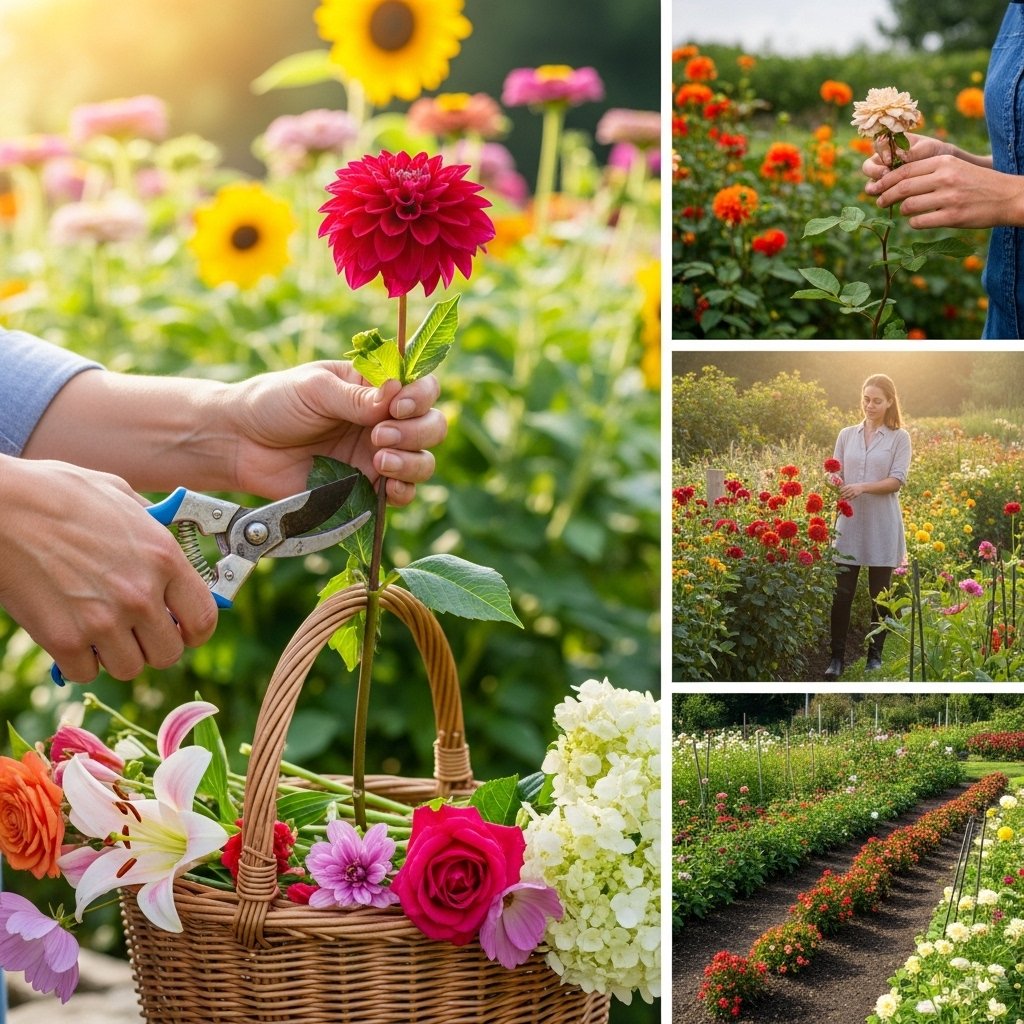
Harvesting flowers correctly promotes further growth and prolongs flowering periods. Cut stems in the morning when blooms are fresh and full of moisture. Remove any spent flowers to encourage new buds and prevent disease. Rotate harvesting across beds to maintain plant balance and ensure a consistent supply for bouquets. Smart harvesting combined with careful garden design ensures your full sun cut flower garden remains productive and visually appealing.
13. How to Care for Cut Flower Garden in Full Sun
- Water Regularly – Keep soil moist, especially during hot days, but avoid waterlogging.
- Protect from Harsh Sun – Early morning or late evening watering helps flowers handle full sun.
- Prune and Deadhead – Remove dead flowers and trim plants to encourage new blooms.
- Use Fertilizer – Feed plants with balanced fertilizer to keep them healthy and vibrant.
- Watch for Pests – Check leaves and stems regularly and treat any infestations promptly.
13.1. FAQ
13.2. What is a cut flower garden layout for full sun❓
A cut flower garden layout for full sun is a planned arrangement of flowering plants that grow best in at least six to eight hours of direct sunlight each day. The layout focuses on organizing flowers in rows or sections so they are easy to maintain and harvest. This type of garden is designed to produce a continuous supply of fresh flowers for cutting while ensuring each plant gets enough sunlight to grow strong and healthy.
13.3. Why is full sun important for a cut flower garden❓
Full sun is important because most cut flowers need plenty of sunlight to produce strong stems and vibrant blooms. Sunlight helps plants perform photosynthesis efficiently, which leads to better growth and more flowers throughout the season. Without enough sunlight, plants may become weak, produce fewer blooms, and struggle to thrive.
13.4. How should I arrange plants in a full sun flower garden❓
In a full sun flower garden, it is best to place taller flowers at the back or center and shorter varieties at the front. This ensures that all plants receive adequate sunlight without being shaded by taller ones. Grouping flowers with similar water and soil needs together also makes maintenance easier and helps create a balanced and visually appealing layout.
14. Final Thoughts
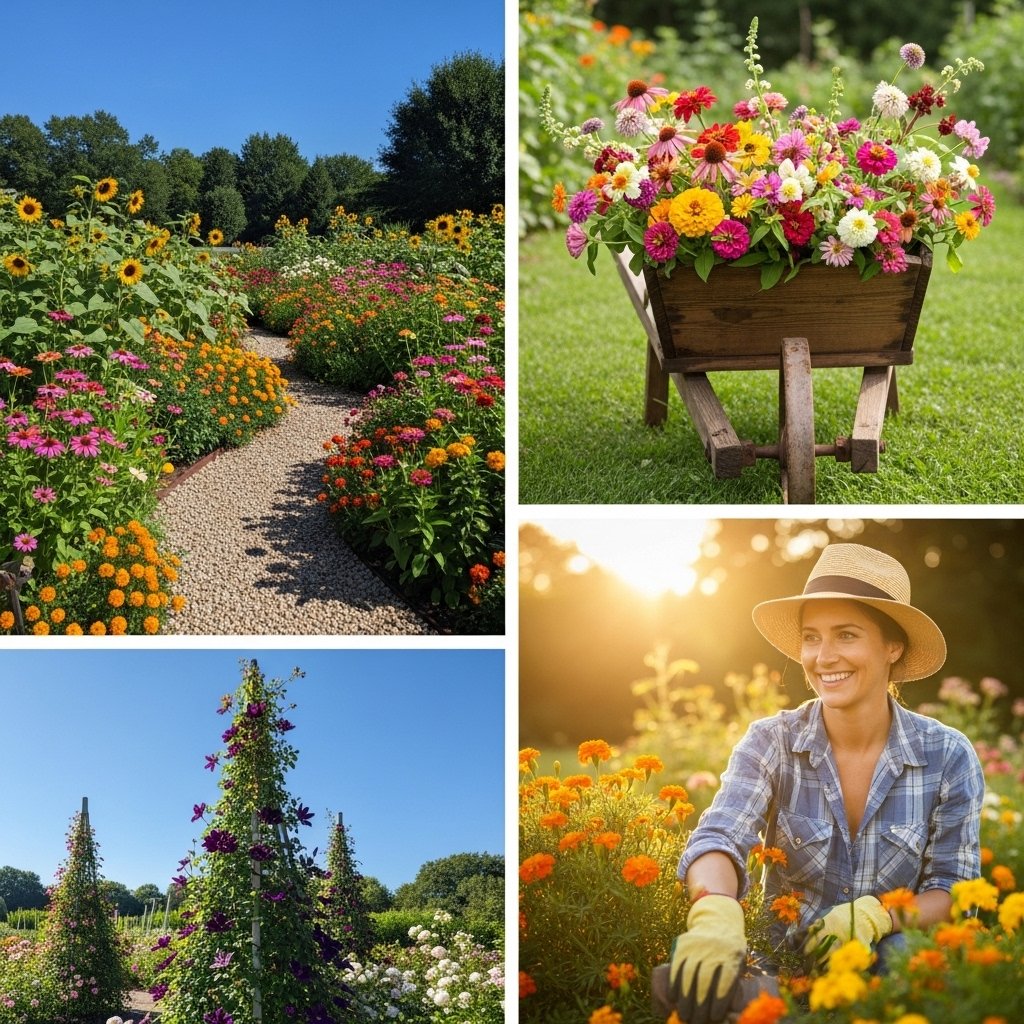
Designing a cut flower garden for full sun combines creativity, planning, and practical care. By considering flower varieties, color palettes, heights, textures, and pathways, you can create a garden that is both stunning and highly productive. Proper care, including watering, fertilization, and smart harvesting, ensures long-lasting blooms for bouquets and decorations. Whether you’re an experienced gardener or a beginner, these layout strategies help you enjoy a thriving garden all season long. With thoughtful planning, your full sun cut flower garden can become a personal paradise for cutting, arranging, and admiring beautiful blooms.