Transplanting Plants Indoor Pots: A Complete Guide for Healthy Growth
Blog > Home > Indoor Plants & Home Decor > Transplanting Plants Indoor Pots: A Complete Guide for Healthy Growth
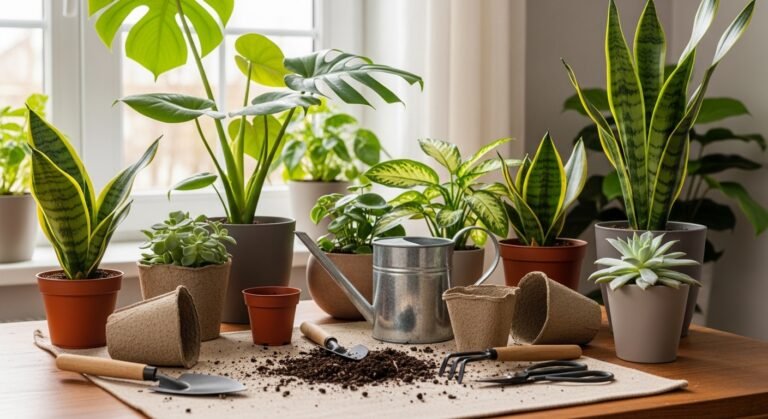
Transplanting plants indoor pots is an essential step for maintaining healthy, thriving houseplants. As plants grow, they often outgrow their current containers, leading to root crowding and limited access to nutrients. Repotting not only gives roots more space but also refreshes the soil, improving drainage and overall plant health. Whether you’re a beginner or an experienced plant lover, understanding the right techniques can make a huge difference. In this guide, you’ll learn 12 practical and optimized ideas to successfully handle transplanting plants indoor pots with confidence.
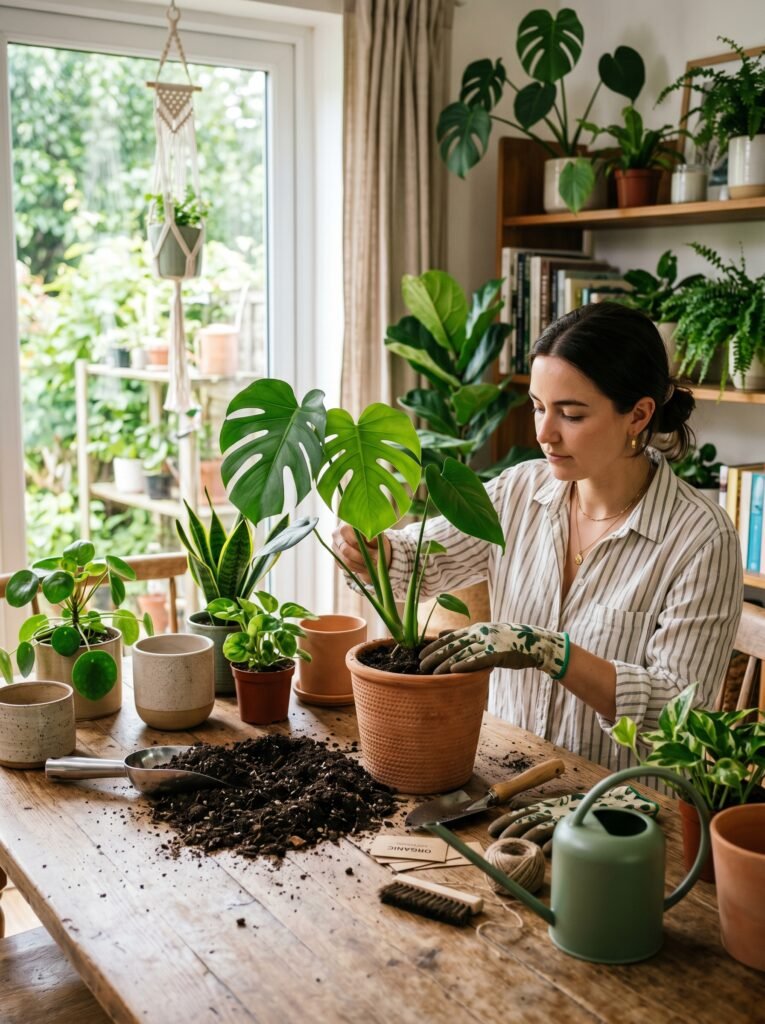
Table Of Content
1. Know When Your Plant Needs Transplanting
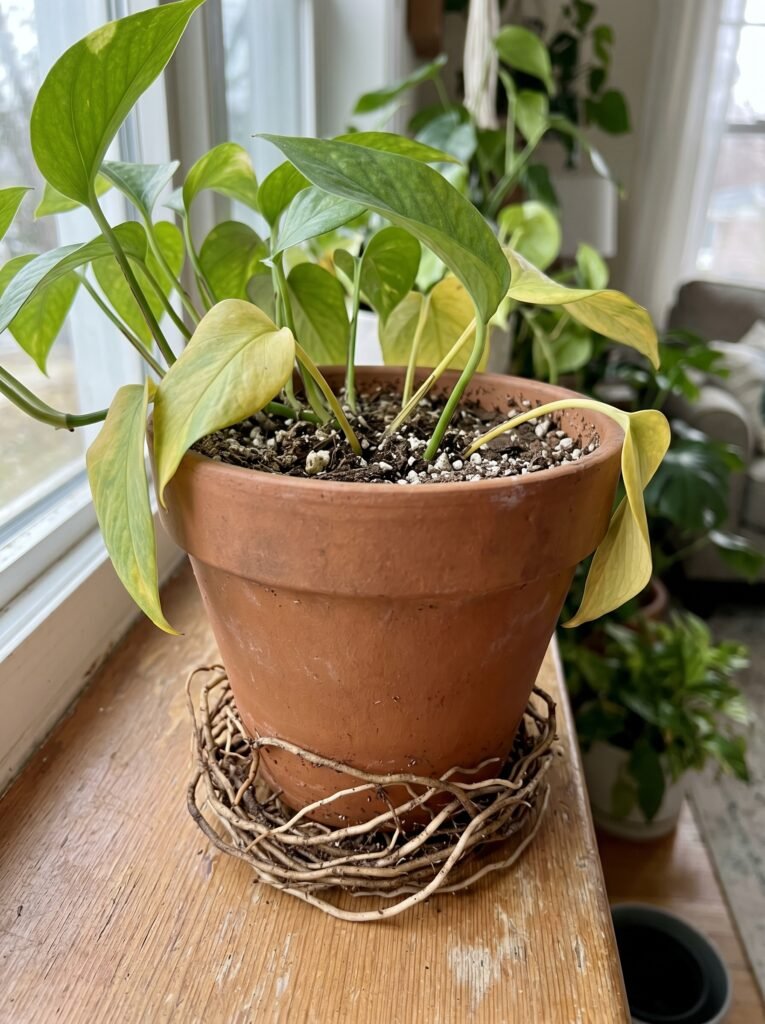
Recognizing the right time for transplanting plants indoor pots is crucial for success. Signs like roots growing out of drainage holes or soil drying too quickly indicate it’s time to repot. You may also notice slowed growth or yellowing leaves due to lack of nutrients. Checking the root system gently can confirm if the plant is root-bound. Acting at the right time helps prevent stress and promotes healthy growth.
2. Choose the Right Pot Size
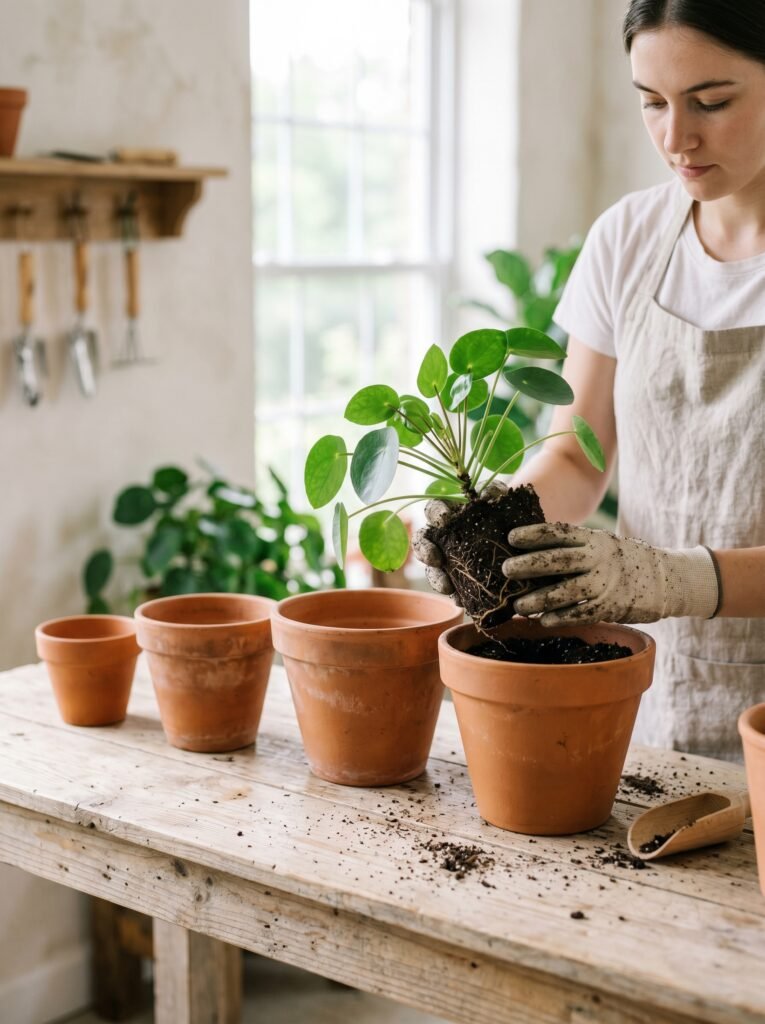
Selecting the correct pot size is key when transplanting plants indoor pots. Always go one size larger rather than choosing an overly large container. A pot that is too big can hold excess moisture, leading to root rot. Ensure the new pot has proper drainage holes for water flow. The right size allows roots to expand while maintaining balanced moisture levels.
3. Use High-Quality Potting Soil
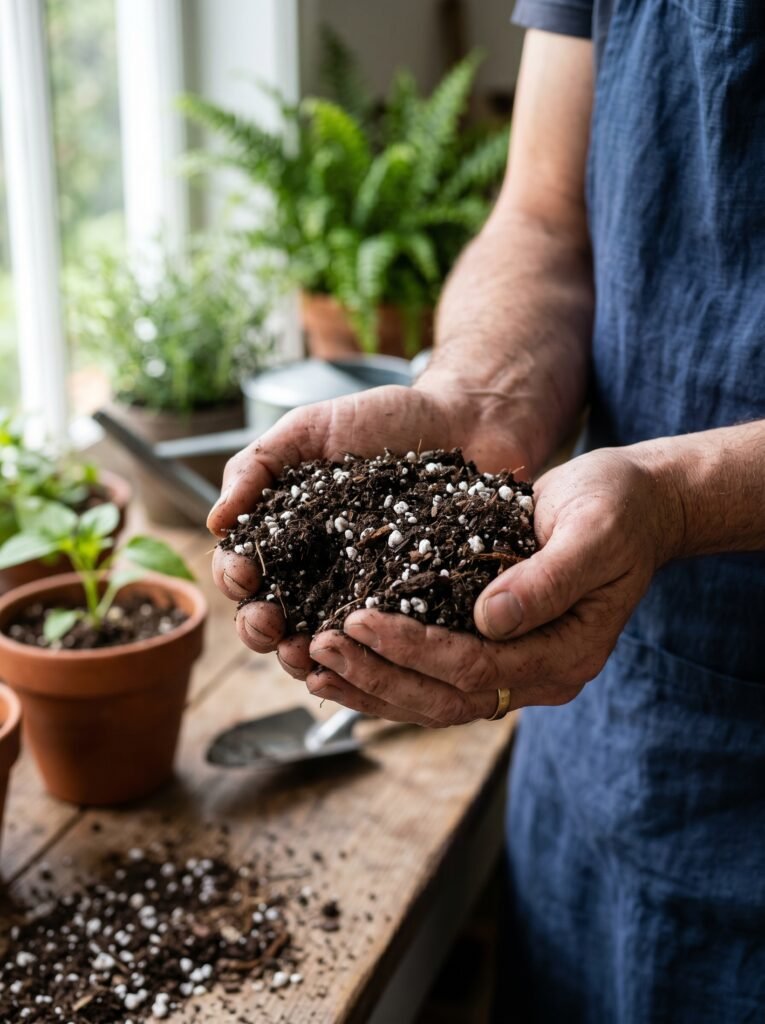
Soil quality plays a major role in successful transplanting plants indoor pots. Avoid using garden soil, as it may compact and restrict airflow. Instead, choose a well-draining potting mix suited to your plant type. You can also enhance soil with perlite or compost for better aeration and nutrients. Fresh soil ensures your plant gets the nourishment it needs to thrive.
4. Water the Plant Before Transplanting
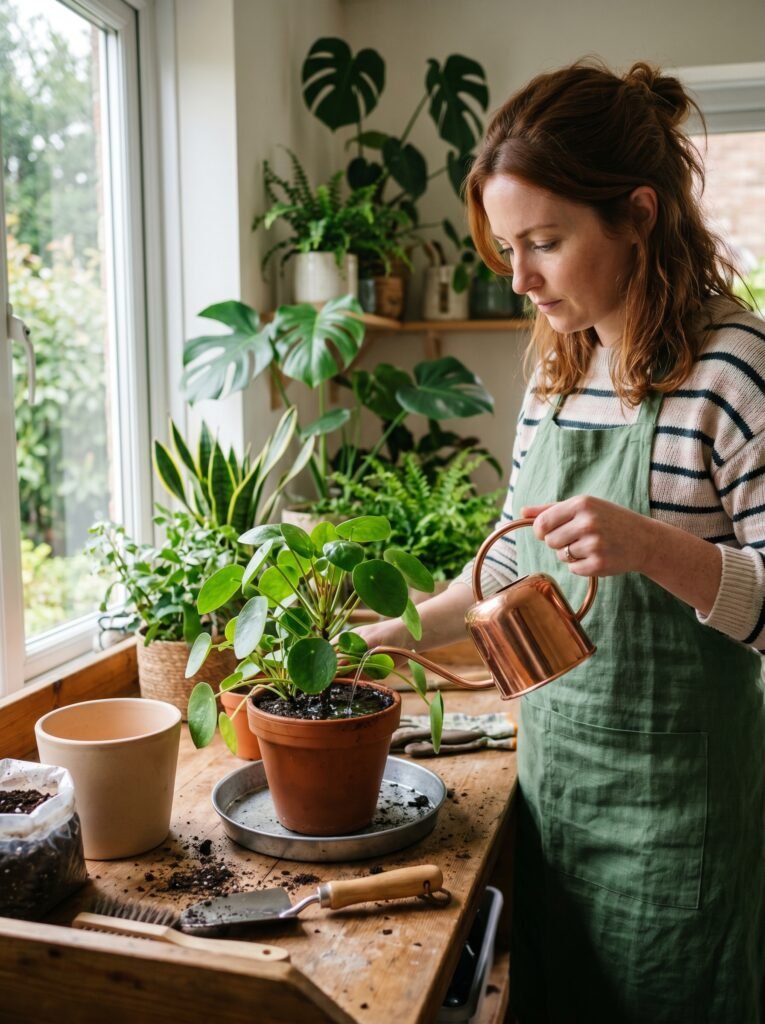
Watering your plant before transplanting plants indoor pots makes the process smoother. Moist soil helps loosen the root ball, reducing the risk of damage. It also keeps the plant hydrated during the transition. Avoid soaking the soil excessively, as overly wet roots can become fragile. Proper hydration prepares the plant for a stress-free move.
5. Gently Remove the Plant from Its Old Pot
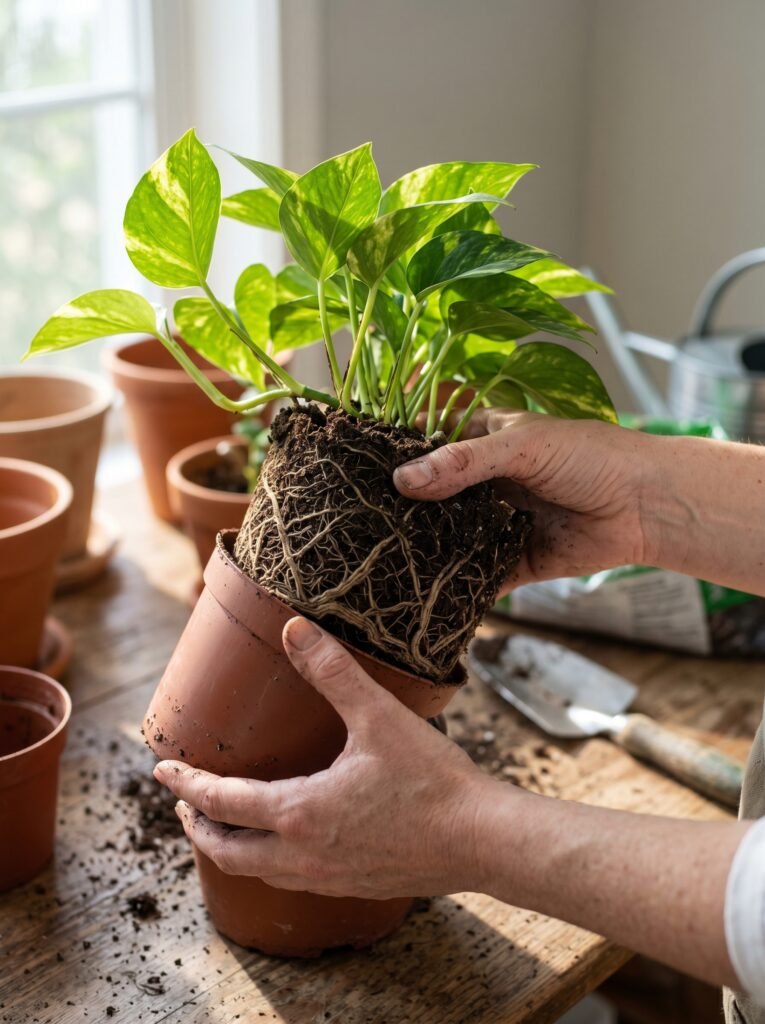
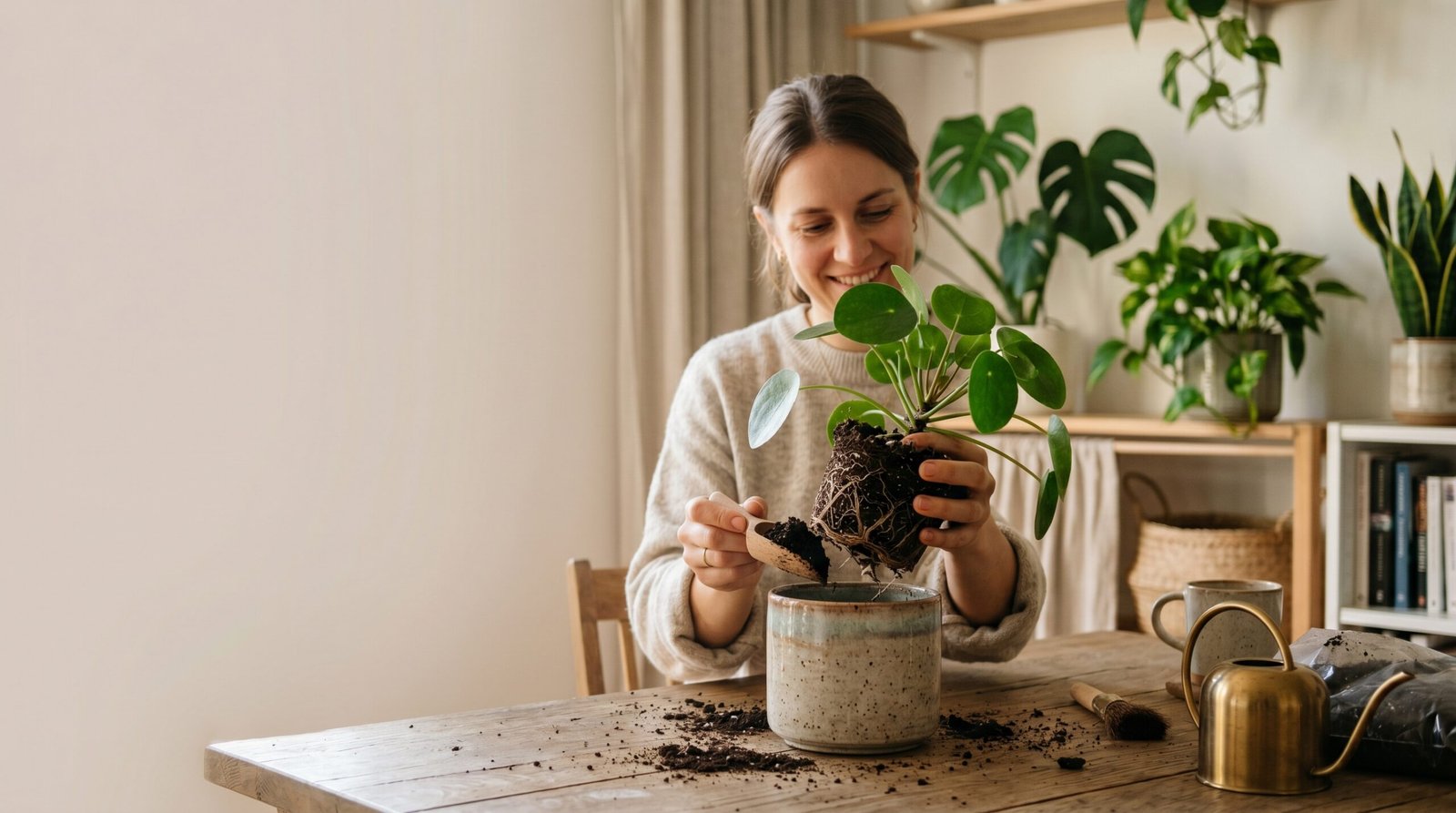
Carefully removing the plant is an important step in transplanting plants indoor pots. Tilt the pot and gently tap the sides to loosen the soil. Hold the plant at the base and slowly pull it out without forcing it. If roots are stuck, you can use a small tool to ease them free. Being gentle prevents root damage and ensures a smooth transition.
6. Loosen and Inspect the Roots
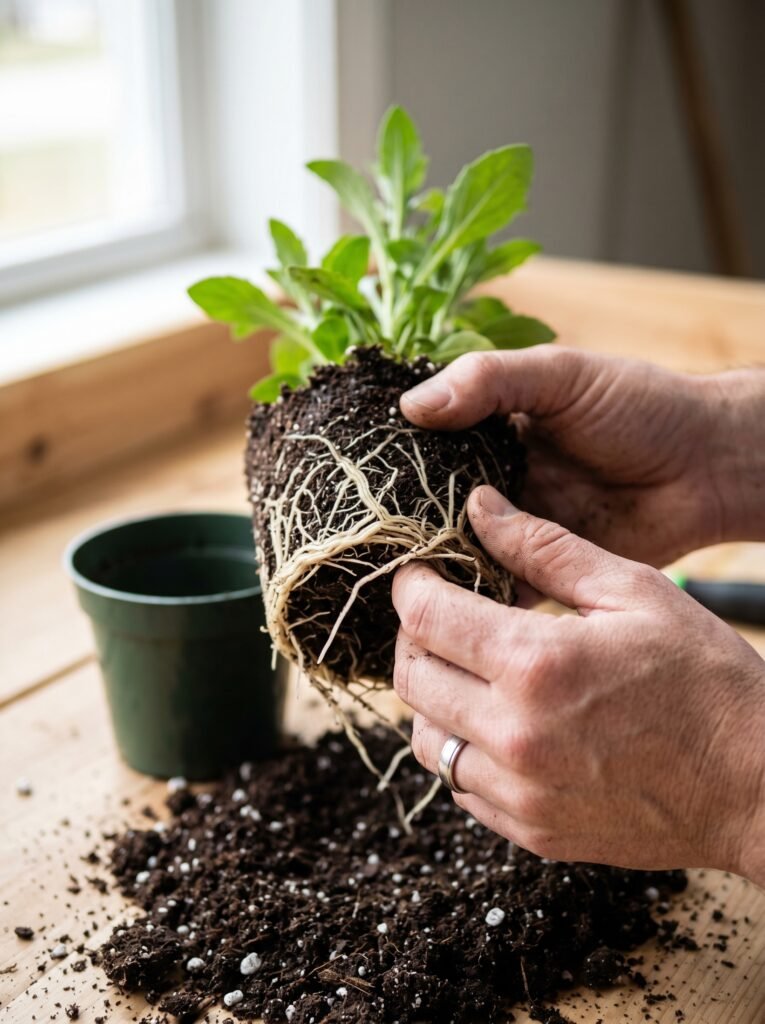
After removing the plant, inspect the roots closely during transplanting plants indoor pots. Gently loosen tightly bound roots to encourage outward growth. Trim any dead or damaged roots using clean scissors. Healthy roots should appear firm and light in color. This step helps the plant adapt quickly to its new environment.
7. Add a Base Layer of Soil
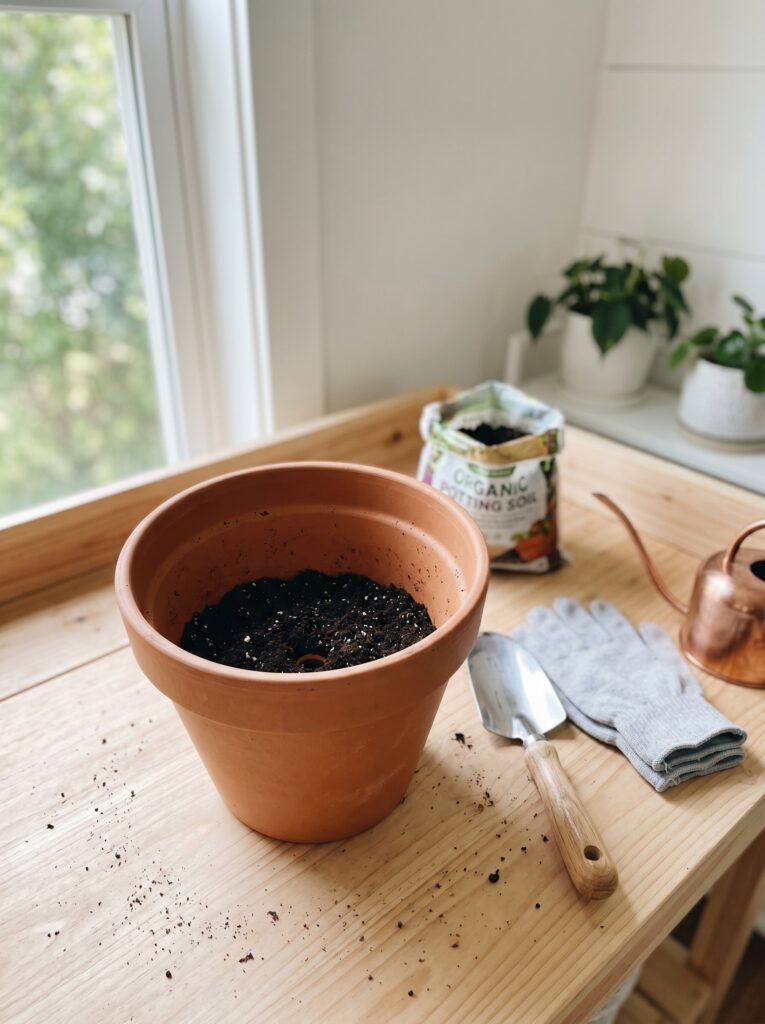
Before placing the plant in its new container, add a layer of fresh soil at the bottom. This ensures the plant sits at the correct height in the pot. Proper positioning prevents water from pooling around the stem. It also allows for better root spread and stability. A good foundation supports long-term plant health.
8. Position the Plant Correctly
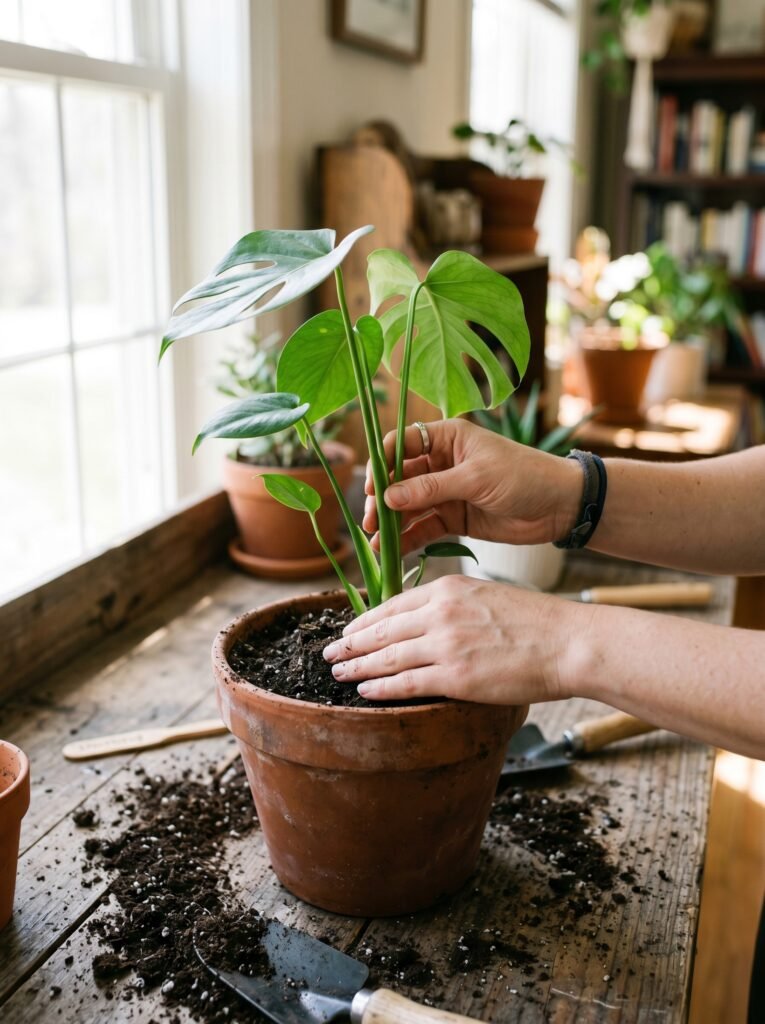
Positioning is crucial when transplanting plants indoor pots. Place the plant in the center of the pot and ensure it stands upright. Avoid planting too deep, as this can cause stem rot. Keep the top of the root ball slightly below the rim of the pot. Proper placement ensures balanced growth and easy watering.
9. Fill and Firm the Soil Gently
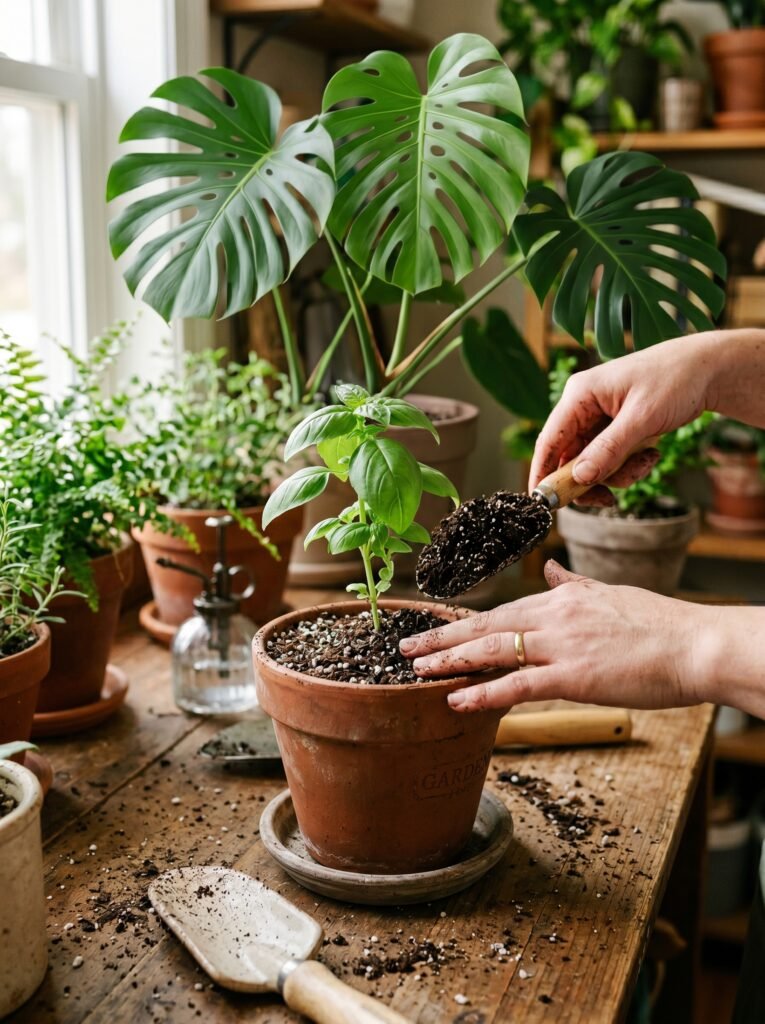
Fill the remaining space around the plant with fresh potting mix. Gently press the soil to remove air pockets without compacting it too much. Loose soil allows roots to breathe and grow effectively. Make sure the plant is stable but not tightly packed. This balance is essential for healthy root development.
10. Water Thoroughly After Transplanting
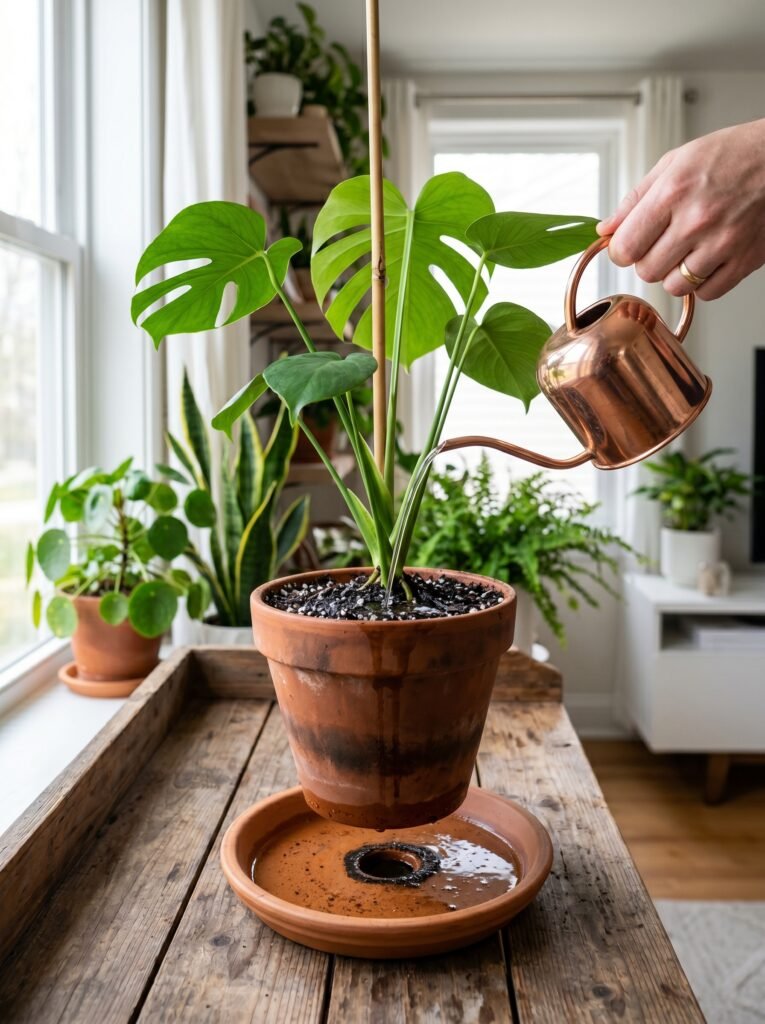
Watering after transplanting plants indoor pots helps settle the soil around the roots. It also eliminates air pockets and provides immediate hydration. Ensure excess water drains out completely to avoid soggy soil. This step is vital for helping the plant adjust to its new container. Proper watering supports a smooth recovery.
11. Place the Plant in the Right Environment
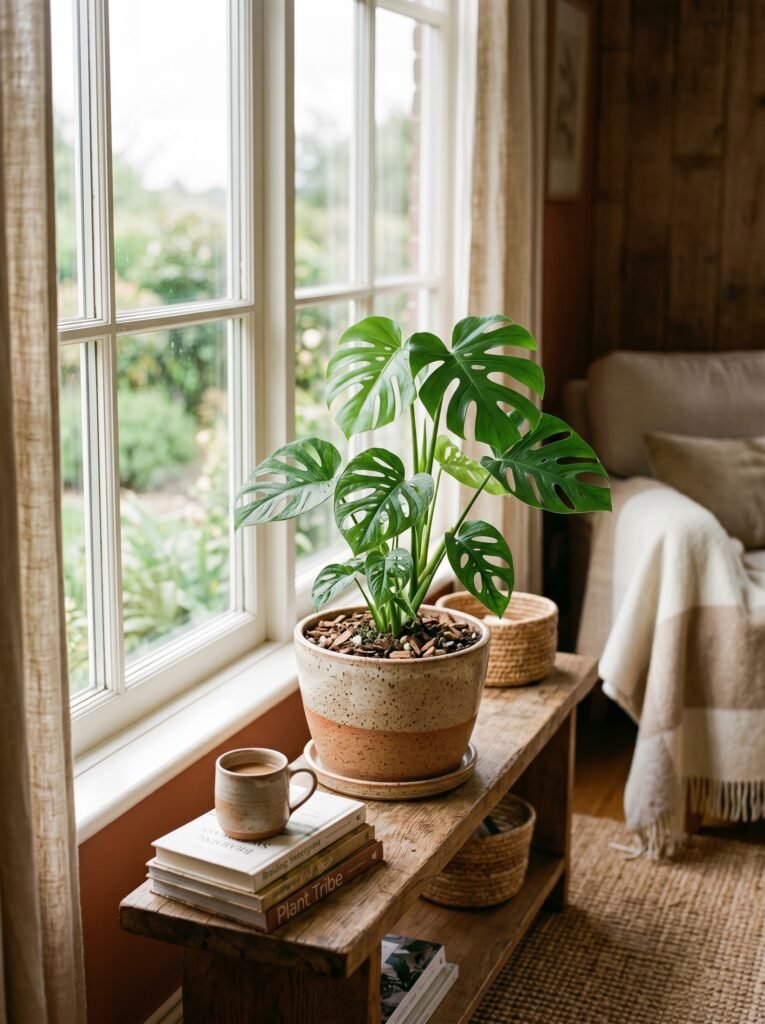
After transplanting plants indoor pots, placing the plant in a suitable location is important. Avoid direct sunlight immediately after repotting, as the plant may be stressed. Choose a spot with indirect light and stable temperature. Gradually reintroduce normal light conditions over time. This helps the plant recover and continue growing.
12. Monitor and Care After Transplanting
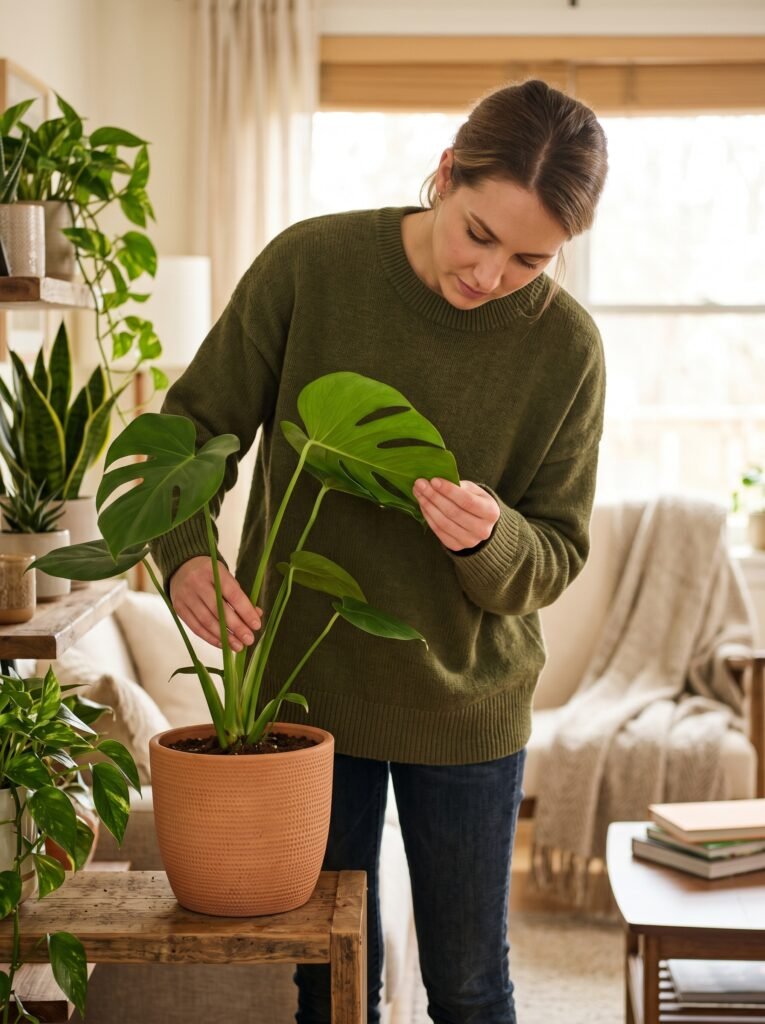
Post-transplant care is essential for long-term success. Keep an eye on your plant for signs of stress, such as drooping or leaf drop. Avoid fertilizing immediately, as fresh soil already contains nutrients. Maintain consistent watering and humidity levels. With proper care, your plant will adapt and thrive in its new pot.
13. How to Care for Indoor Potted Plants After Transplanting
- Water Gently – Water the plant lightly after transplanting to settle the soil, but avoid overwatering.
- Avoid Direct Sunlight – Keep the plant in soft, indirect light to reduce stress.
- Do Not Fertilize Immediately – Wait a few weeks before adding fertilizer to protect the roots.
- Keep Soil Moist – Make sure the soil stays slightly moist, not too dry or too wet.
- Give Time to Adjust – Let the plant rest and recover before moving or repotting again.
13.1. FAQ
13.2. Why should you transplant plants into indoor pots❓
Transplanting plants into indoor pots is important because it gives the plant more space to grow and access to fresh soil with better nutrients. When plants outgrow their old pots, their roots can become crowded, which slows down growth. Moving them to a new pot helps improve root health, supports better water absorption, and keeps the plant strong and healthy indoors.
13.3. When is the best time to transplant indoor plants❓
The best time to transplant indoor plants is usually during the growing season, such as spring or early summer. During this time, plants are more active and can adjust quickly to a new pot. Avoid transplanting in winter when plant growth slows down, as it may cause stress and delay recovery.
13.4. How do you transplant a plant into a new pot❓
To transplant a plant, first choose a slightly bigger pot with drainage holes. Gently remove the plant from its old pot, loosen the roots, and place it into the new pot with fresh soil. Fill the sides with soil, press lightly, and water the plant properly. This process helps the plant settle into its new environment and continue growing smoothly.
14. Final Thoughts
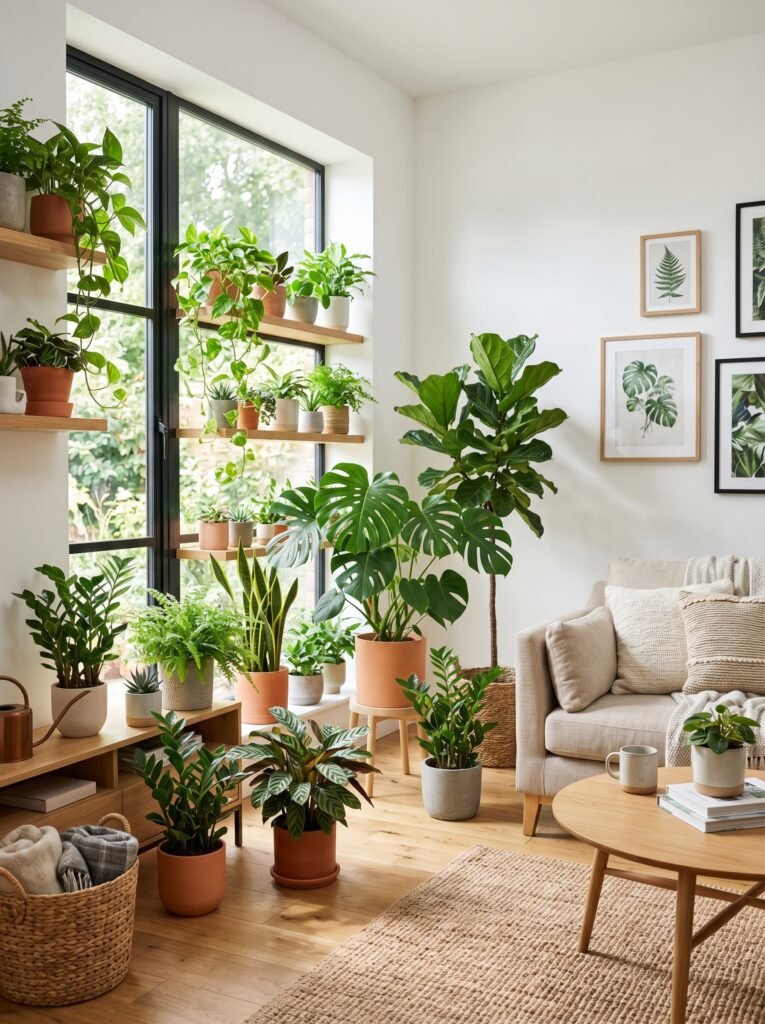
Transplanting plants indoor pots is a simple yet powerful way to keep your houseplants healthy and vibrant. By following the right steps and understanding your plant’s needs, you can prevent common issues like root crowding and poor growth. Each stage, from choosing the pot to post-transplant care, plays a crucial role in success. With practice, transplanting becomes an easy and rewarding part of plant care. Use these 12 structured ideas to confidently repot your indoor plants and enjoy lush, thriving greenery in your home.